Lansdowne Lexington Architecture and Home Styles
June 4, 2026
June 4, 2026
What gives Lansdowne its lasting appeal? In many cases, it starts with the homes themselves. If you are buying, selling, or simply trying to understand this well-known Lexington neighborhood, the architecture tells you a lot about how these properties live, how they look from the street, and why they still feel relevant today. Let’s take a closer look at the styles that define Lansdowne homes.
Lansdowne took shape during Lexington’s postwar suburban expansion. The neighborhood association describes development in the 1960s and 1970s, while the University of Kentucky plat index shows core subdivision units approved from 1958 through 1961.
Taken together, that points to a neighborhood built in phases, with most of its identity formed in the late 1950s through the 1970s. Lansdowne was also planned around convenience, with access to downtown Lexington, the University of Kentucky, New Circle Road, and I-64/I-75.
That timing matters because it helps explain the architecture you see today. Lansdowne’s homes reflect the priorities of that era: practical layouts, comfortable lot sizes, attached garages, and a strong connection between indoor and outdoor space.
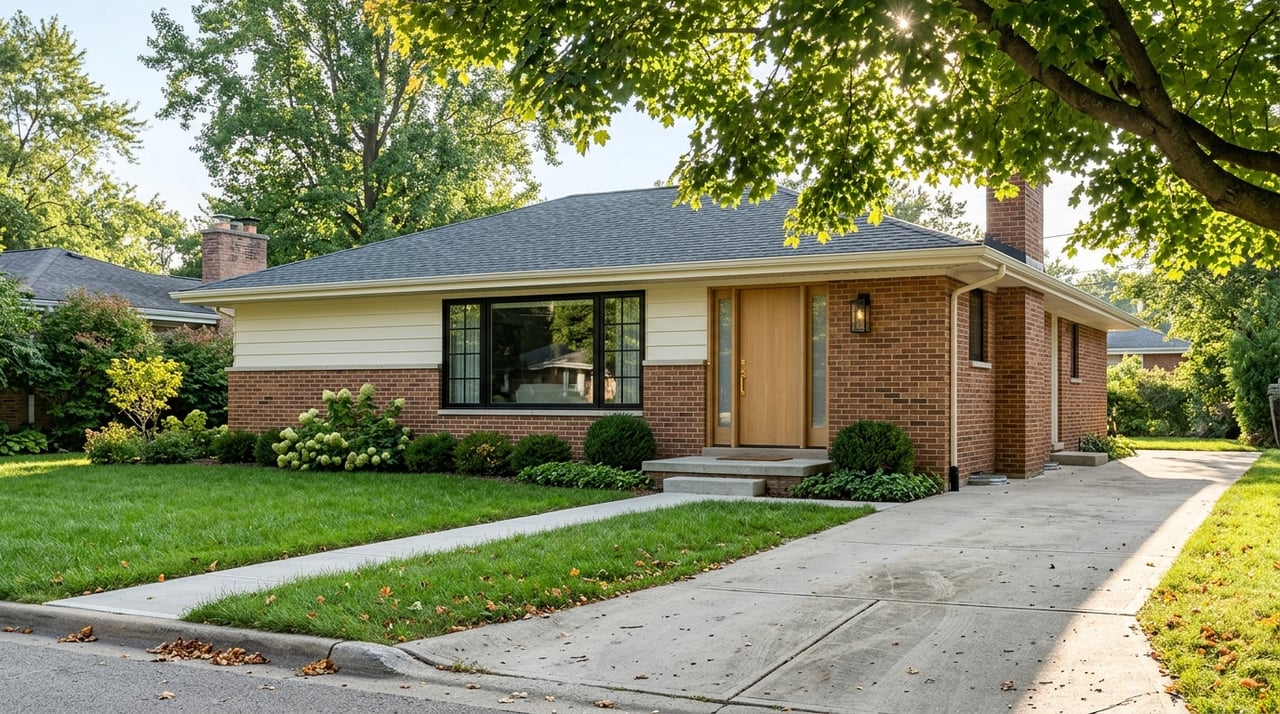
If you picture a classic Lansdowne home, there is a good chance you are picturing a ranch. Recent listings regularly describe brick ranch homes from 1954, 1959, and 1963, and neighborhood age data show that about 55% of Lansdowne housing units were built between 1950 and 1979.
That makes the mid-century ranch the neighborhood’s core housing type. In practical terms, that usually means a low, horizontal profile, one-level main living areas, and a layout designed for easy everyday use.
Many Lansdowne ranch homes also carry the visual features buyers still respond to today. You will often see brick facades, broad front windows, low rooflines, and mature landscaping that softens the architecture and adds curb appeal.
The ranch style has held up well because it is flexible. According to the National Park Service, ranch homes often emphasize one-level living, open floor plans, large picture windows, and a more informal split between public and private rooms.
In Lansdowne, that flexibility often shows up in real-world ways that matter to buyers. Many homes include formal living and dining rooms, plus a den or family room, screened porch, basement, or walk-up attic that creates room for storage, expansion, or updated living space.
For daily life, that can mean easier circulation and fewer stairs in the main living areas. It can also mean a home that adapts well over time, especially when thoughtful updates improve kitchens, lighting, or gathering spaces.
Not every Lansdowne home reads as purely traditional ranch. Some properties have been restored or remodeled in ways that bring out a stronger mid-century modern or contemporary character.
Lexington’s broader mid-century design history helps explain this. Local architecture coverage notes that mid-century homes in the city often featured open floor plans, exposed beams, Kentucky limestone, and generous windows.
In Lansdowne, that influence is often most visible in updated homes marketed as reimagined or beautifully restored mid-century residences. These homes may keep their original low-slung form while adding cleaner finishes, brighter interiors, and a stronger connection between interior space and the yard.
When a Lansdowne home has been renovated, the strongest updates usually respect the original bones of the house. Buyers often notice whether the massing, natural light, and overall flow still feel true to the home’s original design.
Kitchen renovations are often a major part of that story. So are finished basements, attic expansions, and additions that change how the home functions without losing the simplicity that made the original architecture appealing.
This is one reason Lansdowne still feels current. Many homes have been refreshed rather than replaced, so the neighborhood retains its mid-century foundation while offering more modern livability.
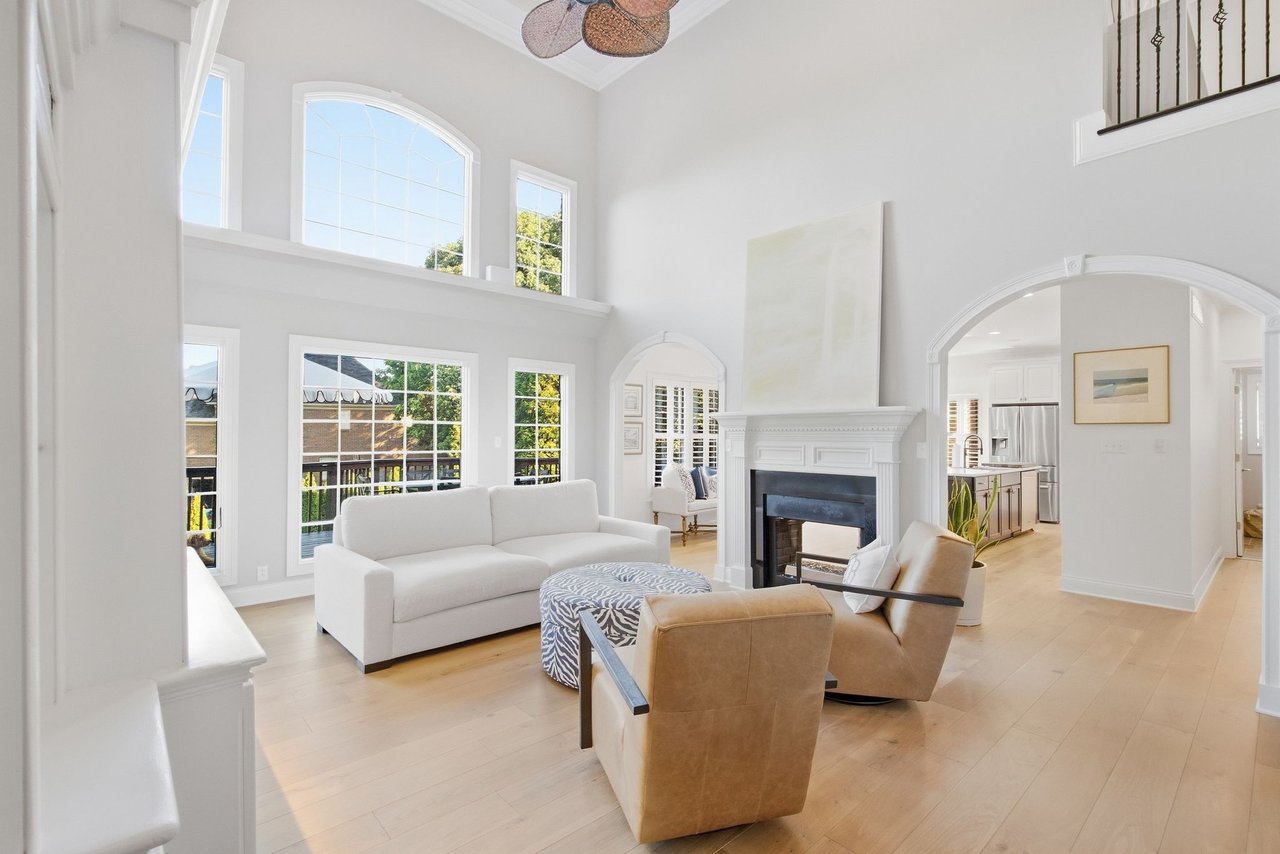
Lansdowne is not made up of ranch homes alone. The neighborhood also includes traditional two-story homes and split-level homes, especially in Lansdowne Estates and in later or more extensively remodeled properties.
Recent listings point to this variety, including two-story homes with features like foyers and arched entries, along with homes explicitly described as split-level. That broader mix gives buyers more than one architectural path into the neighborhood.
Two-story homes often appeal to buyers who want more separation between living areas and bedrooms. Split-level homes can offer a different kind of flexibility, with living spaces arranged across staggered levels that create distinct zones without the full vertical feel of a traditional two-story plan.
| Style | Common Features | What It Often Means for Daily Living |
|---|---|---|
| Ranch | One-level main layout, low roofline, broad windows, brick exterior | Easier circulation, fewer stairs, strong indoor-outdoor flow |
| Mid-century updated | Opener layouts, larger windows, contemporary finishes | Better light, flexible gathering spaces, modernized function |
| Two-story | More vertical layout, formal entry features in some homes | More separation between public and private spaces |
| Split-level | Staggered floors, distinct activity zones | Flexible layout with separation but less formality than a two-story |
Architecture is only part of the story in Lansdowne. The lot and setting often shape how a home feels just as much as the floor plan.
In the core neighborhood, many ranch homes sit on standard suburban lots with mature trees and enough depth for driveways, outdoor living, or later additions. In Lansdowne Estates, lot sizes can become much larger, including estate-style parcels around 1.4 acres and 1.9 acres.
Some listings also highlight cul-de-sac locations, creek adjacency, or sites near parks. For buyers, that means Lansdowne can offer a wider range of settings than you might expect from a neighborhood often associated with classic mid-century ranches.
Lansdowne’s curb appeal is often more about proportion than ornament. Instead of highly decorative facades, the neighborhood tends to rely on strong basics: brick exteriors, wide windows, attached garages, low rooflines, and established landscaping.
That restrained look is part of the neighborhood’s charm. It creates a consistent visual rhythm from one street to the next, even when homes vary in size, updates, or floor plan.
The surrounding amenities reinforce that mature suburban feel. The UK Arboretum, Zandale Park, and the central Signature Club all contribute to the setting that makes Lansdowne feel settled, established, and connected.
If you are considering a home in Lansdowne, it helps to look beyond style labels and focus on how the architecture affects daily use. An older ranch may offer easier living on the main floor, but the real question is how well the home’s original design and later updates work together.
A few practical things to evaluate include:
In a neighborhood like Lansdowne, details matter. Homes with similar square footage can live very differently depending on their floor plan, level of renovation, and relationship to the lot.
If you own a Lansdowne home, your architecture may be one of your strongest marketing advantages. Buyers are often drawn to homes here because they want character, established surroundings, and a layout that feels distinct from newer construction.
That means sellers can benefit from highlighting the features that make their home legible to the market. Original mid-century lines, large windows, brick construction, flexible bonus spaces, and thoughtful updates all help tell the story.
For updated properties, presentation matters just as much as the renovation itself. Buyers tend to respond best when a home’s original character and current livability feel connected rather than in conflict.
Lansdowne remains appealing because its architecture strikes a rare balance. The homes often have mid-century bones, mature settings, and practical layouts, but many have also evolved in ways that suit how people want to live today.
That combination gives the neighborhood depth. You are not just looking at a collection of houses. You are looking at a part of Lexington shaped by postwar growth, thoughtful suburban planning, and homes that continue to adapt without losing their identity.
If you are trying to understand what makes Lansdowne stand out, the answer is often right in front of you: low rooflines, brick facades, wide windows, and houses that still work beautifully decades after they were built.
Ready to make sense of Lansdowne’s architecture from a buyer’s or seller’s perspective? Connect with Bradford Queen for a tailored market strategy and white-glove representation.
Q3 2026 Central Kentucky Market Report

Every move is unique, and success is measured by both the experience and the outcome. In partnership with Bradford, every detail will be handled with persistence, discretion, and care.
Let's Connect
Bluegrass Sotheby's International Realty 1999 Richmond Road, Suite 400 Lexington, Kentucky 40502