In Kenwick, the Short-Term Rental Permit Doesn't Come With the House
October 29, 2026
October 29, 2026
"The conditional use permit shall become null and void upon change in ownership." That sentence is a standard condition in Lexington Board of Adjustment staff recommendations for unhosted short-term rentals, including one on the board's December 8, 2025 agenda. For anyone looking at Kenwick's newer, larger infill houses, it's the most important line in the city's rental rules.
The seller can show you booking calendars and income statements. The rental approval behind them ends on closing day. Whether a new owner can get it back depends on how many neighbors already hold one, because the city measures each application against the rentals already nearby. On a busy block, the house can be worth less to the next buyer than it was to the person who built it.
In March 2024, the Lexington Herald-Leader reported that Kenwick neighbors had told the Board of Adjustment the neighborhood had 41 short-term rentals, plus 10 more they said were operating illegally. One longtime Sherman Avenue resident counted 12 rentals on his street and said football weekends were busy, while the houses sat largely empty during the week.
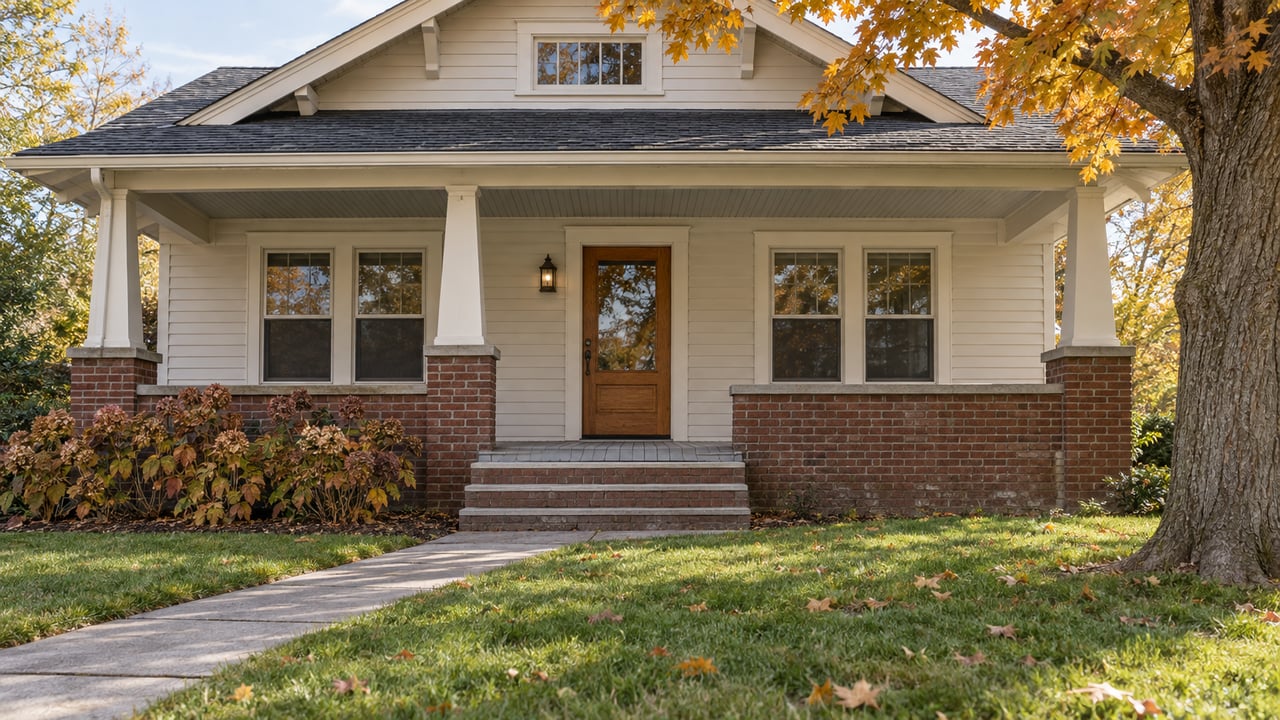
The same report described how the houses were made. Smaller, affordable homes in the 300 blocks of Sherman, Bassett, Lincoln and Owsley were bought and then flipped or sometimes torn down. Larger houses built for multiple families on short stays took their place, and the vertical metal siding earned them a local nickname, "the barns." The paper photographed 341 Sherman Avenue as an example. One resident told the Herald-Leader that a new home across the street from hers had recently sold for nearly $1 million. That figure is a 2024 anecdote, not a current market number.
Kenwick's zoning makes that kind of rebuilding possible. The neighborhood isn't on the city's roster of H-1 historic districts and landmarks, so no historic-overlay review stands between a buyer and a teardown. Infill is still happening. On the Board of Adjustment's August 10, 2026 agenda, Kenwick Partners, LLC asked to cut the front-yard setback at 272 Lincoln Avenue from 87 feet to 20 feet so it could build a single-family home. Staff recommended approval, noting that the lot sits in the city's Infill and Redevelopment Area and that houses along Lincoln already have varied setbacks.
So the houses keep coming. What changed is the set of rules for renting them out.
On December 5, 2024, the Urban County Council adopted two ordinances that rewrote Lexington's short-term rental rules. The zoning changes took effect December 12, 2024. On a single-family lot in the residential zones, an unhosted rental is a conditional use, so it needs Board of Adjustment approval. Only one dwelling unit or one accessory dwelling unit per property can be used this way.
Here is what happens to each piece of a rental operation when the house changes hands:
| Piece of the operation | What the rules say happens at sale |
|---|---|
| Special-fee license from the Division of Revenue | Expires upon a change in licensee or ownership |
| Conditional use permit for an unhosted rental | Standard staff condition makes it null and void upon change in ownership |
| Rental operating before July 11, 2023 | May continue, but a change in ownership requires a new conditional use permit |
| Occupancy | Two people per bedroom plus two, or 10 total, whichever is less |
The license language is in Ordinance 1235-24. Every license also expires each December 31 and ends if the operation switches between hosted and unhosted. The pre-2023 provision and the occupancy cap are in Ordinance 1210-24. A new license application calls for a site plan showing legal off-street parking and proof of at least $1 million in general liability insurance per occurrence. The city's licensing page lists the fee as $200 for the first unit and $100 for each additional unit, renewed every year.
Even a rental that was running before the 2023 rules took hold goes back before the board when it sells. In Kenwick, a sale always reopens the question of whether the house can keep operating as an unhosted rental.
The new owner then has to clear two density tests, and both depend on the surrounding block. Under Ordinance 1210-24, conditional-use rentals can't exceed 2 percent of all dwelling units within 1,000 feet in residential zones. A new one also can't sit within 600 feet of another rental that holds a conditional use permit or operates as a legal nonconforming use.
The board can grant relief case by case. The applicant has to show the rental wouldn't add to an overconcentration of unhosted rentals or hurt the local housing stock, and the request has to fit one of three situations:
Two staff reports show how this works on actual parcels. In December 2025, staff recommended approving an unhosted rental at 3017 Neal Drive. One other rental was inside its 600-foot buffer, but the buffer line cut through that property, which qualified it for relief, and concentration within 1,000 feet was under 2 percent. Staff capped occupancy at eight and added the condition that the permit becomes void on a change in ownership.
The January 13, 2025 agenda shows a denser in-town block. It isn't in Kenwick, but the zoning matches Lincoln Avenue's R-2 Infill and Redevelopment Area. For an unhosted rental proposed at 528 W. Third Street, staff counted 27 short-term rentals within 1,000 feet, or 3.04 percent of dwelling units. Staff wrote that this "borders on a too-high concentration for the area," noted the property had no off-street parking, and recommended disapproval.
For a Kenwick buyer, every rental that already holds approval near the house counts against the buyer's application, and the seller's own permit dies at closing. The 2024 reporting described clusters of rentals on particular blocks, which is exactly how this rule is applied. The neighbors who keep their houses keep their approvals. On a crowded block, the house that sells is the one most likely to lose its rental status for good.
For pricing, a few things follow. An unhosted rental's income history belongs to its current owner. A buyer who wants that income is betting on a future board hearing, not acquiring a permit, so the seller's numbers make a weak foundation for an offer.
Hosted rentals work differently. On single-family lots in the residential zones, a hosted rental for up to 10 occupants is an accessory use, not a conditional one, and it doesn't require a board hearing. Any host or permanent resident present during a stay counts toward the occupancy limit. It still needs the city license, and that license also expires at sale. So a large Kenwick infill house can mean very different things to an owner who plans to live in it and to an investor who doesn't.
Which buyers the house appeals to shapes its sale price, and in a dense part of Kenwick that pool may be mostly people who plan to live there. Sellers of rental-built houses should keep that in mind when they set a price.
These rules hold only as long as Frankfort leaves them alone. In 2025, Senate Bill 110 would have barred local permit requirements and density limits for short-term rentals, but it stalled in committee in February. The same session, a House effort to attach rental provisions to Senate Bill 61 also failed to become law. The Mentelle Neighborhood Association noted the failure that March and warned the sponsor might try again. In 2026, Senate Bill 112 proposed broad limits on local rental controls, covering conditional use permits and density rules. Its last recorded action was a committee referral on January 21, 2026.
None of these bills passed, so the Lexington ordinances still apply. Because the proposal has returned in consecutive sessions, though, the rule set a buyer underwrites today could change in a future session.
If a Kenwick listing is marketed with rental history, these questions turn the sales pitch into checkable facts:
This post is general information about Lexington's published rules, not legal, tax or financial advice. Confirm any specific property's zoning, permit status and plans with the city's planning and revenue divisions and your own attorney or financial advisor.
If you're weighing a Kenwick infill house and want its rental history, permit status and nearby rental count laid out before you write an offer, Bradford Queen can put that picture together and help you price the house on what actually transfers at closing. Connect for a tailored market strategy and white‑glove representation.


Q3 2026 Central Kentucky Market Report
Every move is unique, and success is measured by both the experience and the outcome. In partnership with Bradford, every detail will be handled with persistence, discretion, and care.
Let's Connect

Bluegrass Sotheby's International Realty 1999 Richmond Road, Suite 400 Lexington, Kentucky 40502